

The historical Charleston Market is one of the city’s most beloved spots to visit for visitors and residents. It has been a haven and north star for buying, selling, and trading since its original construction in the 1790’s and continues to thrive as a booming shopping location even today. As a prominent place in the city that has held onto its significance for centuries, many find themselves interested in the market’s origins and the history behind its creation and continuous operation. Because of its popularity, there tends to be a lot of talk about its backstory, but with that can come misconceptions. It’s important that you know the truth behind this well-loved Charleston landmark and why it is a central piece of the city’s identity.
Historical Context

The story of the Charleston Market begins with a man named Charles Cotesworth Pickney, who ceded land centrally on the peninsula as a convenient place for buying, selling, and trading goods. The market was constructed in the 1790s and quickly became a bustling hotspot in the city for selling meats, fish, and fresh vegetables that were grown on plantations. Prices to rent a booth were low, which attracted many vendors and drew excessive attention to the area. People used it as a central place to purchase food for their families, which only had them coming back for more.
It’s a common misconception the Charleston Market was a hub for the purchase and trading of slaves. While slaves did spend a lot of time in the market, they were sold in the Old Exchange Building and the Old Slave Mart. Slaves were often forced to haul the produce and meat to stalls in the city market for their owners, which is how the city market has been given the nickname, “slave mart.” They were responsible for the upkeep of the market, and without them it would not have been such a prominent location at the time.
Market Disasters
The market suffered many natural disasters, such as fires, earthquakes, and tornadoes, but stood its ground until the late 1830s when a devastating fire consumed the building. Because of the market’s popularity and economic boost, the fire was a catastrophic loss. Architect Edward Brickwell White was offered $300 to create new blueprints for the building so the heart of the city could be restored. It was important to Edward to stay true to the integrity of the original design, but included changes to maximize the space as a community area that could be rented out. Still, the sheds stand today, paying homage to the design of the original market. If you stand outside of the market, you’ll find engravings of both an ox and a ram’s head, signifying the buying of meat in the market in the past. If you look closely you may find other “easter eggs” around the market that give historical clues behind its’ origin story.
The market has seen numerous natural disasters since its second reconstruction, notably, Hurricane Hugo which significantly damaged the exterior. The market continues to undergo restorations to continue its long-held legacy and focal point of the peninsula. It has since survived numerous hurricanes and tornadoes and a massive earthquake, but still stands proudly and strongly for Charleston citizens and tourists to enjoy.
The Market Today
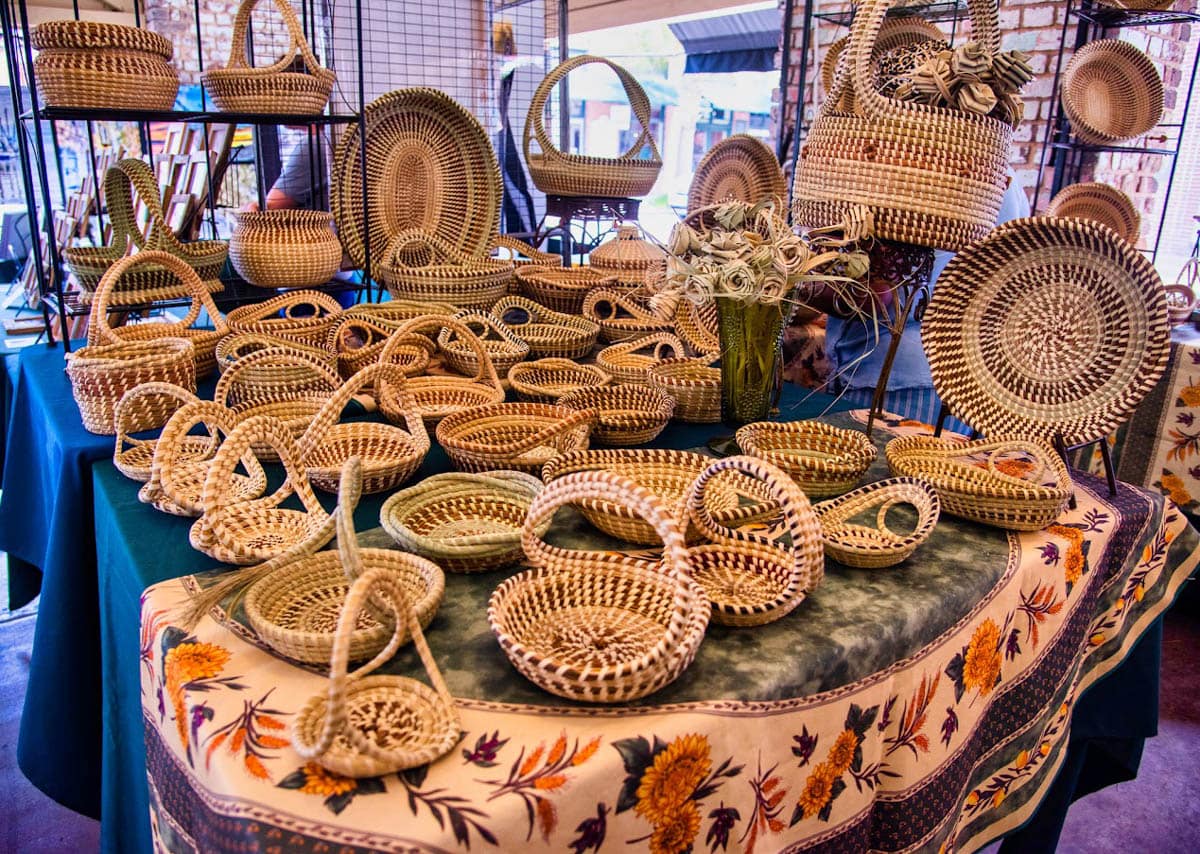
Today, the market is still bustling with hundreds of vendors as a hotspot for shopping and a must-visit location while in the Holy City. While you might not find as many fresh fish and meats, you’ll find unique local art, clothing, jewelry, treats, and more!
Another frequented item sold in the market is the sweetgrass basket, which was popularized by the Gullah-Geechee people who descended from the slaves who were brought from West Africa to the Lowcountry. One notable sweetgrass basket maker is Tonya Aiken Acres, who is a beloved member of the Charleston city market community. She, along with many other talented artisans, are featured in our list of local artisans, many who can be spotted in stalls at the market. The tradition has continued its legacy and can be purchased from various vendors spotted in the market. Aside from these baskets making a stunning gift, it serves as a reminder of the history of the Holy City and gives the opportunity to reflect on how far the city has come.
The Holy City
Want to browse through intricate sweetgrass baskets, chat and buy from local vendors, or just get a glimpse of one of the city’s most beloved landmarks? A quick trip to the Charleston City Market has all that and more. Experience the excitement of leaving with a new local product and the chance to be apart of the glue that has held the city together for centuries. The market is not just a place to shop, but a piece of of Charleston’s story that continues to grow to this day.
Written by Alexis Boatner


